
Bitcoin Breaks $81,000 as Treasury Buyback Rumors Crush Short Sellers
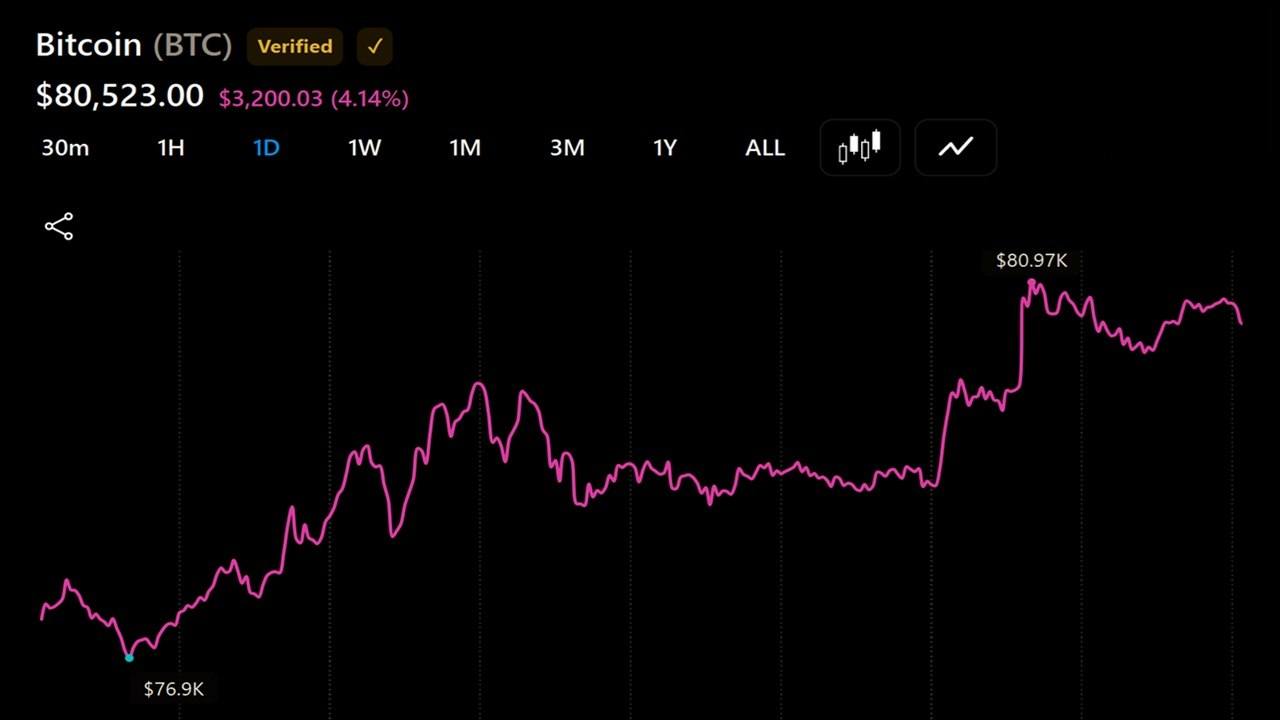
Bitcoin pushed past $81,000 late Monday as speculation around U.S. Treasury bond buybacks helped fuel a broader market rally and forced a wave of bearish crypto traders out of their positions.
According to Bitstamp data cited in the source, bitcoin reached $81,255 at 10:45 p.m. EST on Aug. 24 before pulling back and holding above $80,500. The move of more than 4% lifted bitcoin’s market capitalization to nearly $1.62 trillion and reduced its year-to-date loss to 8%, compared with 9.5% less than 12 hours earlier.
Short Sellers Take the Hit
The rally was especially punishing for traders betting against bitcoin.
Coinglass data cited in the source showed that bitcoin’s price move liquidated $177 million in short positions over four hours, compared with $4.5 million in long positions. Over 24 hours, bitcoin short liquidations reached $282 million, accounting for about 62% of all liquidated crypto-market short positions.
Liquidations can intensify a rally when short sellers are forced to buy back into a rising market, adding more upward pressure to prices.
Treasury Reports Add Fuel
The price move followed reports that the U.S. Treasury could use its roughly $950 billion General Account to fund bond purchases. Treasury yields moved lower after the reports, according to CNBC figures cited in the source.
The 10-year Treasury yield fell more than 3 basis points to 4.704%, while the 30-year yield dropped more than 4 basis points to 5.234%. The pullback came after the 30-year yield had recently reached a multi-decade high, according to the source.
Some market observers reportedly believe Treasury Secretary Scott Bessent may be trying to pressure Commodity Trading Advisors and quantitative strategies that are short U.S. Treasuries. Kip Herriage, founder of Vertical Research Advisory, was quoted as saying a squeeze of that scale would “send bond prices soaring and interest rates plummeting.”

Druckenmiller Warns Against Price Management
Not everyone views the potential intervention as constructive.
Investor Stanley F. Druckenmiller criticized the Treasury’s Aug. 19 move to double long-dated bond buybacks from $2 billion to at least $4 billion per operation, according to the source. He argued that the market quickly rejected the move after long-term yields briefly fell and then reversed within 24 hours.
“The market’s verdict was swift and correct: This wasn’t liquidity management, it was price management—and a mistake far larger than $4 billion suggests,” Druckenmiller wrote, according to the source.
He argued that official intervention should be reserved for severe market dysfunction, citing March 2020 and September 2022 as examples, rather than periods of normal price discovery shaped by high inflation, a $40 trillion national debt, and persistent deficits.
Druckenmiller also warned that artificially suppressing yields could become a “subsidy to procrastination” for lawmakers by masking fiscal pressure and weakening long-term confidence in the U.S. Treasury market.
Why Bitcoin Traders Are Watching Bonds
For bitcoin investors, the bond-market debate cuts directly into one of the asset’s core narratives: that a fixed-supply digital asset may benefit when confidence in government debt management or currency purchasing power comes under pressure.
The latest rally does not prove that narrative on its own. But the timing shows how quickly bitcoin can respond when macro traders start repricing expectations around Treasury operations, yields, liquidity, and risk appetite.